
Performance Tires & Traction FAQ — Complete Guide for Street, Track, and Off-Road
Why Tires and Traction Matter
Your tires are the only part of your vehicle that actually touch the road, track, or trail — which means they have more influence on performance than almost any other upgrade. The right tire choice can transform your launch, cornering grip, braking distance, and overall stability. Whether you’re running drag radials for maximum hook at the strip, track tires for high-speed cornering, mud-terrains for off-road confidence, or all-terrains for a balanced daily driver, matching your tire to your driving style is key. From sizing and fitment to compound and tread design, every choice affects how your car puts power to the ground and stays planted when it counts.
- How do I choose the best performance tire for my car?
It all comes down to how you drive.
- Drag racing? Go with soft-compound drag radials or slicks for max traction at launch.
- Off-road or trail use? Choose mud-terrain for deep ruts, or all-terrain for a balance of off-road grip and street comfort.
- Street/strip or weekend performance builds? Use DOT-approved street tires: legal for road use but built for straight-line grip, not daily comfort or wet-weather traction.
Not sure what fits your setup? Give us a call and we’ll get you dialed in.
- What’s the difference between street tires, drag radials, track tires, and mud-terrains?
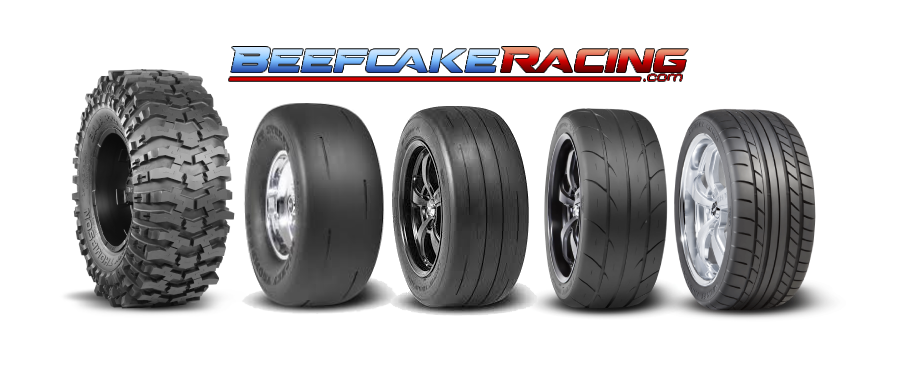
- Street tires are DOT-approved drag radials, tires built to deliver serious traction off the line while still being technically legal for street use. They’re designed for straight-line performance, not daily driving.
- Drag radials offer killer straight-line grip thanks to their soft compound and minimal tread. Just keep in mind that they’re not great in rain or slick conditions, even though they’re technically street legal. Drive smart.
- Track tires offer high-temp grip for cornering and braking, but wear fast and ride rough on the street.
- Mud-terrain tires have aggressive tread blocks and reinforced sidewalls for off-road grip in dirt, sand, and, you guessed it, mud. They’re not quiet or smooth on the street, but they’ll get you through the rough stuff without blinking.
Each type is built for a purpose. Whether you’re launching at the strip, pushing through a trail, or carving corners, the right tire makes all the difference.
- What’s the difference between radial and bias-ply tires?
- Radial tires have flexible sidewalls and steel belts at 90°. They offer better ride quality, longer tread life, and are ideal for street use or IRS setups.
- Bias-ply tires have stiffer, crisscrossed layers for max launch traction. Great for straight-line drag racing, especially on solid-axle cars.
Radials = better handling and comfort. Bias-ply = better hook at the strip.
- How do I figure out the right tire size for my setup?
Tire size depends on your wheel size, gear ratio, suspension travel, and what you’re doing with the car.
- Taller tires = more top end and higher trap speed
- Wider tires = more contact patch and traction
Want to nail your fitment? Check your clearance and talk to your tuner or builder, or hit us up and we’ll get you squared away.
- How should I store drag or performance tires in the off-season?
- Store in a cool, dry, dark space (ideally 40–90°F)
- Deflate slightly and remove from vehicle
- Stack flat, not upright
- Bag in black plastic to block UV
- Keep away from sunlight, ozone (motors), oils, or chemicals
Proper storage extends tire life and performance.
- How long do drag tires usually last?
Most drag tires last 20–50 passes, depending on power, prep, and burnout habits. Inspect them every 30 passes. Slipping launches or inconsistent 60-ft times may mean it’s time to replace.
- When should I replace my performance tires?
Performance tires don’t last forever — and pushing them past their limits can be dangerous, especially at high speed or under hard launch.
Here’s what to watch for:
- Uneven tread wear or exposed cords
- Cracking, dry rot, or sidewall damage
- Noticeable loss of traction, longer braking distance, or slower 60-ft times
- Tread depth below legal limit — Most states require at least 2/32" of tread. Use the penny test: stick a penny into the groove with Lincoln’s head down. If you can see the top of his head, your tires are too worn for the street.
If your tires are starting to look worn, brittle, or feel loose on launch, it’s time to swap them out. Driving on compromised tires is a safety risk, especially for high-horsepower cars where traction and stability are everything. New tires don’t just improve performance — they keep you planted and protected.
8. Should I run a wide tire or a narrow one?
It depends on your setup and what you're trying to do.
Wide tires look aggressive and offer more stability and flotation — ideal for high-horsepower builds, off-road setups, or cars that need to plant power cleanly.
Narrow tires shine in muddy or soft-surface conditions where cutting through the terrain delivers better traction. They're also lighter and may clear suspension components more easily in tight fitments.
Pick based on your goals — not just the look.
9. How do I measure a drag tire to make sure it fits?
Fitment isn’t just about diameter — you’ve got to factor in section width, sidewall growth, and clearance on launch.
- Measure diameter and section width to make sure the tire clears sheet metal, suspension arms, and wheel tubs.
- Leave at least ½ to 1 inch of side clearance to allow for flex and movement under load.
- Account for tire growth at speed — plan for at least twice the tire's growth factor to avoid rubbing at full throttle.
When in doubt, mock it up first, or call us and we’ll walk you through it.
Need More Help?
Contact us or call us at 1-855-827-7223.
