

Performance Brake Upgrade FAQ & Buyer’s Guide
- Why Upgrade Your Brakes?
Horsepower gets all the attention — but real performance means having the stopping power to match. Upgrading your brakes isn’t just about safety; it’s about control, consistency, and confidence every time you drive. Stock braking systems are built for average street use, which means they can fade or lose bite when pushed hard. A performance brake upgrade — including high-performance pads, rotors, calipers, stainless lines, and quality brake fluid — delivers shorter stopping distances, better heat management, and stronger pedal feel. Whether you’re daily driving, carving through canyon roads, or chasing lap times at the track, the right brake system keeps you in command when it matters most.
- What’s the difference between street and track brake pads?
Street pads are designed for daily comfort — quiet stops, minimal dust, and reliable performance in a wide range of temperatures. They work well for normal driving and occasional spirited runs. Track pads, on the other hand, are built to handle extreme heat from repeated high-speed braking. They use more aggressive compounds that deliver maximum bite and resist fade, but they can produce more noise, dust, and rotor wear in street driving. Choosing the right pad comes down to where you spend most of your time behind the wheel. - How do I know when I need bigger calipers?
If your car is producing more power, running grippier tires, or seeing more frequent track time, your stock calipers might start to feel overworked. Signs include a soft pedal after repeated stops, longer braking distances, or visible heat damage to pads and rotors. Larger multi-piston calipers apply braking force more evenly across the pad, increase clamping power, and improve pedal feel — all of which help when you’re pushing the limits. - What do drilled and slotted rotors do?
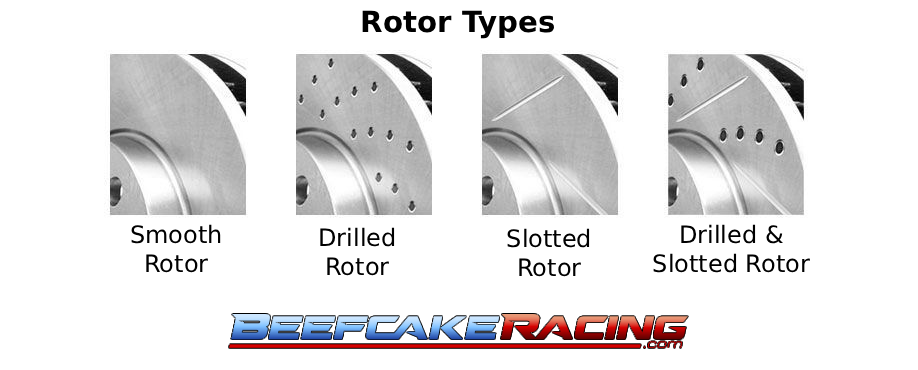
Drilled rotors feature holes that allow hot gases, water, and debris to escape, keeping the braking surface cleaner and reducing fade. Slotted rotors use machined grooves to continually refresh the pad surface for better initial bite and more consistent braking in wet conditions. Many performance drivers use rotors that combine both features for maximum cooling and pad contact. The result is improved stopping power and more consistent pedal feel under demanding conditions. - What’s the advantage of stainless steel brake lines?
Rubber factory brake lines can expand slightly under heat and high-pressure braking, which softens pedal feel. Stainless steel braided lines resist that expansion, maintaining firm, consistent pedal pressure even under repeated hard stops. This not only improves driver confidence but also helps deliver a more immediate brake response, making them a popular upgrade for performance builds and track cars. - Will upgrading my brakes make my car stop shorter?
Yes — especially when you upgrade as a system. Pairing high-performance pads with quality rotors, stainless steel lines, and good tires can cut stopping distances dramatically compared to stock. Beyond just shorter stops, you’ll also gain more control and stability under braking, which is crucial when entering a corner or slowing from high speeds. - How does brake fluid affect performance?
Brake fluid transfers pressure from your pedal to the calipers. Under extreme heat, standard fluid can boil, introducing air bubbles that compress and reduce stopping power — this is brake fade. High-performance brake fluid has a higher boiling point, meaning it can handle more heat before losing effectiveness, keeping pedal feel consistent during spirited driving or track use. - How often should I replace brake fluid?
For most daily drivers, replacing brake fluid every 1–2 years works well. If you drive aggressively or attend track events, it’s smart to flush the system more often — particularly before and after heavy-use weekends. Brake fluid naturally absorbs moisture over time, lowering its boiling point, so staying on top of maintenance helps keep your brakes performing at their best. - What’s brake fade, and how do I avoid it?
Brake fade occurs when heat overwhelms your braking system, causing a noticeable loss of stopping power. This can happen during long downhill runs, repeated hard stops, or track sessions. To avoid fade, use performance pads, rotors that shed heat efficiently, high-temp brake fluid, and stainless lines to maintain consistent pedal feel. - Do bigger rotors always stop better?
Not automatically. Larger rotors do offer more surface area for heat dissipation, which helps during repeated high-speed stops. But rotor size alone won’t guarantee shorter stopping distances — it needs to work in balance with the pads, calipers, and tires. Bigger rotors shine in performance or track setups where heat management is a priority.
- Can I install performance brakes myself?
Upgrades like pads, rotors, and stainless lines are often bolt-on and can be installed with basic tools. However, big brake kits or conversions may require more involved work, including brake bleeding and setup, which is best handled by a professional to ensure safety and performance. - What’s the proper way to bed new brake pads?
Bedding is the process of evenly transferring a layer of pad material onto the rotor surface through controlled heat cycles. This helps maximize friction, prevent noise, and extend rotor life. It typically involves a series of gradual stops from medium speeds, followed by a cooldown period, but always follow the pad manufacturer’s instructions for best results. - How do calipers affect pedal feel?
High-quality calipers with more pistons and stiffer construction provide more consistent clamping force and reduce flex under pressure. This translates to a firmer, more responsive pedal feel, allowing you to modulate braking more precisely — a big advantage in both performance and daily driving. - Why does brake pad compound matter?
The brake pad compound determines how the brakes handle heat, bite, and fade. Street compounds focus on quiet, low-dust performance, while carbon or ceramic-based performance compounds are built for high temperatures and aggressive stopping power. Choosing the right compound ensures your brakes perform as expected for your driving style. - What’s special about ceramic brake pads?
Ceramic pads are valued for their ability to handle high heat without fading, deliver consistent performance, and produce less brake dust than some other compounds. Many are best at higher operating temperatures, making them especially effective in spirited driving and track conditions. - Are all ceramic pads the same?
No — manufacturing processes, material density, and additives all vary by pad type. A street ceramic pad will be tuned for comfort and low dust, while a track ceramic pad will prioritize bite and fade resistance. Matching the pad to your intended use is key for the best braking experience. - Why should I bleed my brakes?
Air in the brake lines reduces braking efficiency and causes a soft pedal feel. Bleeding removes that air, restoring firm pedal response and consistent braking performance. This is especially important after heavy braking sessions, system repairs, or any time you replace fluid. - What tools do I need to bleed brakes?
At minimum, you’ll need a jack and stands, a catch bottle or clear tubing, a wrench to open the bleeder screws, and a helper to pump the brake pedal. A brake bleeder kit can make the job easier and more efficient. - What’s the safest way to start the bleeding process?
Always start with the caliper farthest from the master cylinder (usually the passenger-side rear), then work your way closer. This ensures all air is pushed out of the longest lines first, giving you a complete and effective bleed. - Should I refill brake fluid while bleeding?
Yes — always keep the master cylinder topped with fresh fluid during bleeding. Letting it run dry will draw air back into the system, undoing your work and requiring you to start over.
Need More Help?
Contact us or call us at 1-855-827-7223.
